Overhead vs underground power for St George homes: which suits your rebuild or renovation?
The trade-offs between keeping an overhead service line and going underground, and how the choice plays out on St George bungalows, duplexes and rebuilds.
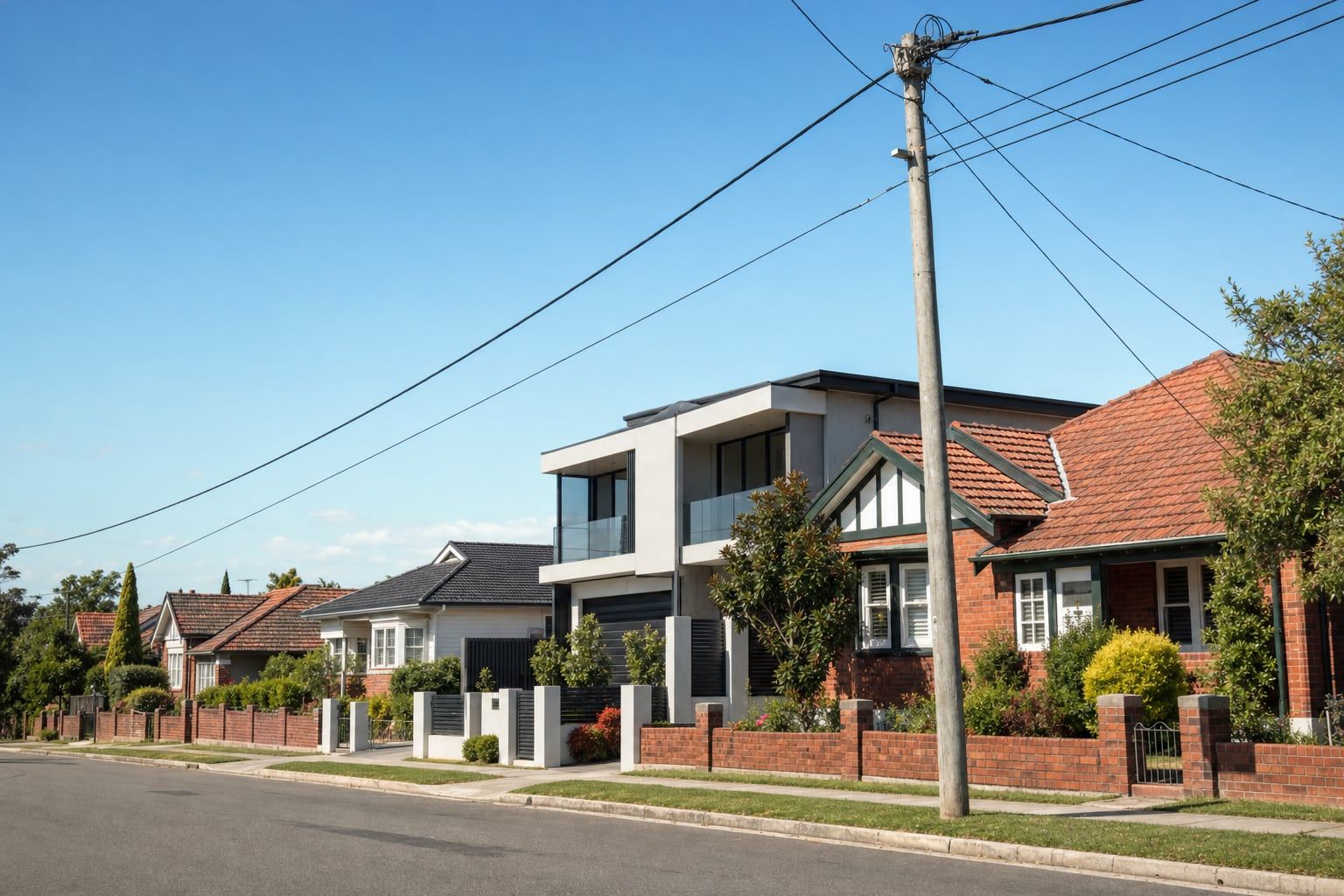
If you own a house in St George, the power almost certainly reaches it through an overhead service line: a black cable from the street pole to a bracket or raiser on your house. For decades that was the only option. Now, with so many rebuilds, duplexes and second storeys going up across Bexley, Hurstville, Kingsgrove and Kogarah, more owners are asking whether they should keep the overhead line or put the supply underground. This guide sets out the trade-offs so you can decide.
How each option works
Overhead. The service line runs through the air from the nearest Ausgrid pole to a point of attachment on your house. From there, consumer mains run down to the meter board. The line has to meet minimum heights over the footpath, driveway and roof, and it needs a clear path that avoids trees, balconies and windows.
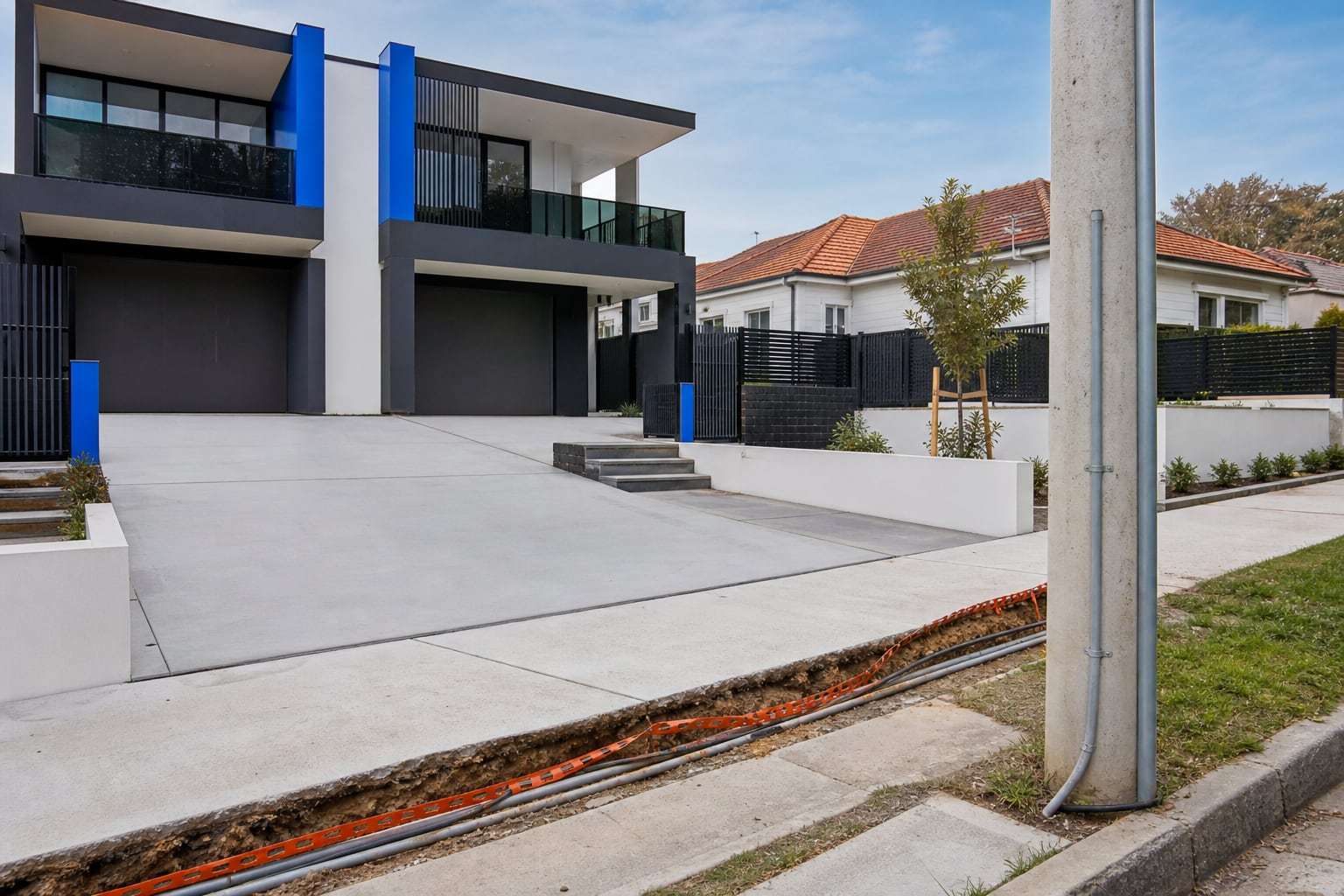
Underground. A cable in heavy-duty conduit runs under the ground from the street to your meter board. In streets with overhead mains, the cable usually goes up the nearest suitable pole in a protective conduit and connects to the mains at the top. In streets with underground mains, it connects at a pit near the boundary.
The case for staying overhead
- Lower cost up front. No trench, no conduit, no cutting concrete.
- Quick to change. Moving a bracket or raising a line is a smaller job than a full conversion.
- Fine for many homes. If the line is high, clear of trees and not in the way of your plans, there’s nothing wrong with it.
For a single-storey bungalow that’s staying single-storey, with a sound bracket and a clean run from the pole, overhead is usually the sensible choice. If the bracket is tired or the line is low, a point of attachment upgrade fixes it for less than a conversion.
The case for going underground
- Out of harm’s way. Branches, wind and vehicles can’t reach a cable in the ground.
- No clearance headaches. Second storeys, balconies, pools and carports no longer need to dodge the line.
- Cleaner street front. A rendered new home or restored bungalow looks better without a wire across it.
- Room for growth. The trench is the moment to put in a cable big enough for three phase power.
Underground costs more at the start, mainly because of the trench and the work at the street pole or pit. On a rebuild, much of that cost overlaps with work already happening on site.
How the choice plays out in St George
Single-storey bungalows staying as they are
Most of these are fine overhead. The common jobs are replacing a rusty raiser, lifting a line that’s too low over the driveway, and upgrading old mains.
Second-storey additions
This is where the overhead line most often gets in the way. The new upper floor can put the existing bracket in the middle of a wall, or bring windows and a balcony too close to the line. You can move the attachment to a new spot on the upper level, or go underground. On homes with a reasonable front setback, many owners find the conversion is only modestly more than relocating the attachment and do it once.
Duplexes
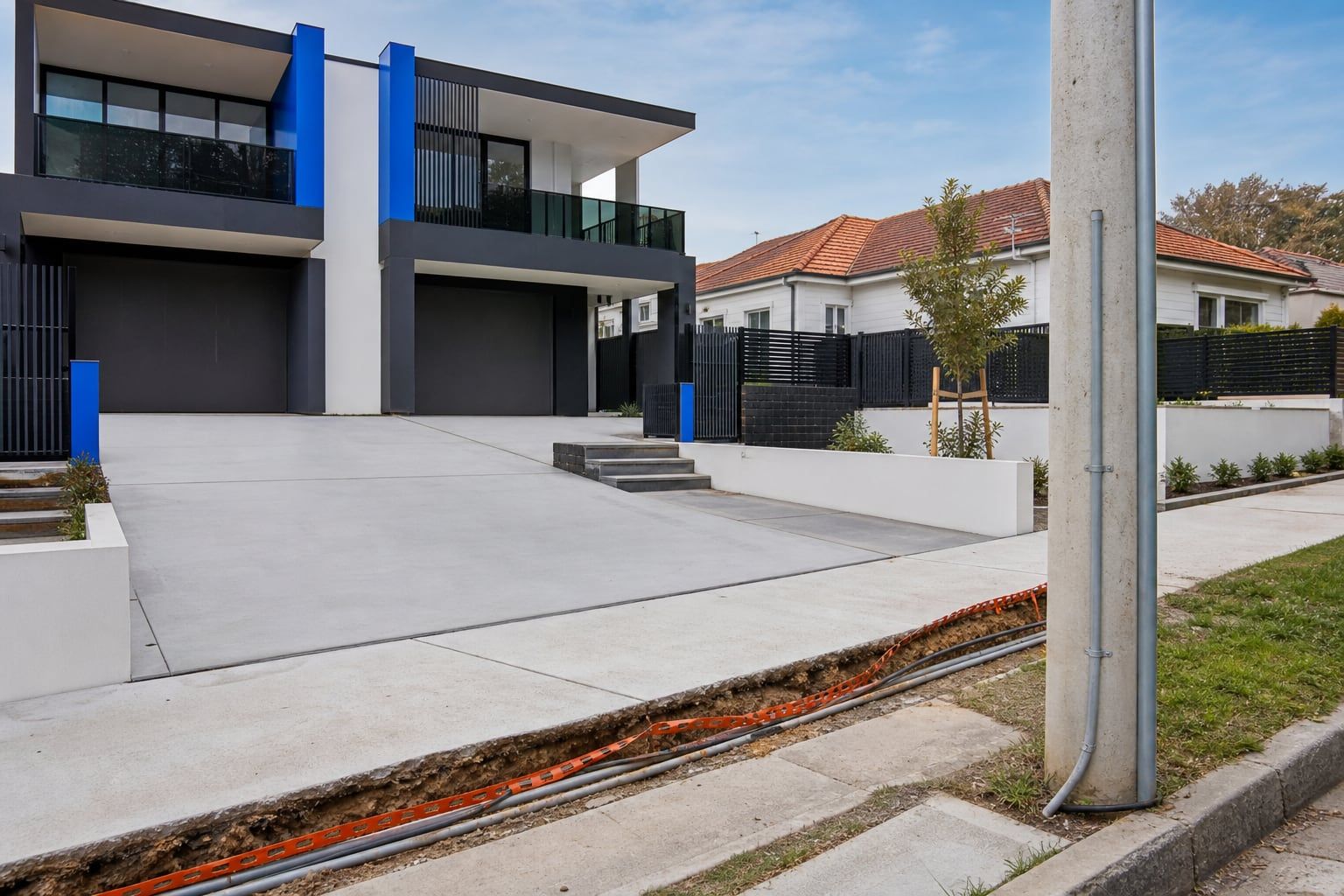
Duplexes usually need two supplies. Running two overhead lines across two new driveways and two front facades is awkward, so most duplexes in Hurstville, Beverly Hills, Kingsgrove and Peakhurst end up underground. Planning this at the start matters: the trench routes, the meter board positions and the temporary site supply all need to fit around the driveways and landscaping.
Knockdown rebuilds
On a full rebuild, going underground is usually the default choice. The site is already a construction zone, the driveway and landscaping are new, and the supply can be designed for the new home’s load from day one. Site power during the build comes from a temporary builders supply.
Bayside and riverside homes
Homes in Sans Souci, Ramsgate, Brighton-Le-Sands and along the Georges River get salt wind that is hard on overhead fittings. Steep river blocks in Oatley and Blakehurst can make trenching harder, but they also tend to have long overhead runs that are worth getting rid of.
What decides the cost
For an overhead change: the bracket or raiser type, its height and fixing, and whether the mains need extending.
For an underground conversion:
- Trench length from the street to the meter board
- What the trench crosses: lawn, concrete driveway, paving, garden beds or sandstone
- Whether the connection is at a pit or up a street pole
- Cable size, especially if you’re going three phase
- Any Ausgrid requirements for the connection
We give a fixed written price after a site visit.
The process for going underground
- Site visit and route planning
- Confirming the connection method with Ausgrid
- Trenching and conduit, done ahead of the connection day
- Connection day: notification lodged, supply isolated, cable pulled in and terminated, tested and reconnected
- The old overhead line and bracket removed
- Certificate of compliance issued
A quick way to decide
Stay overhead if the line is high and clear, the bracket is sound, and you’re not changing the roofline or adding a level.
Go underground if you’re adding a storey, building a duplex or rebuilding, if trees or trucks keep hitting the line, or if you want the cleanest look and room for three phase.
Talk it through
Every block is different. Call the St George level 2 electrician team and we’ll look at your site, price both options where it makes sense, and tell you which we’d choose. Our overhead to underground conversion page has more on the work itself.
Updated
Overhead vs underground power for St George homes: common questions
Something else on your mind? Call 02 9158 9911 and ask.
Is underground power more reliable?
Your own underground service is protected from branches, wind and vehicles, which are the most common causes of damage to an overhead service line. The street mains are a separate matter and stay as they are.
Can I go back to overhead later?
It's possible but rarely done. Once a supply is underground, owners almost always keep it that way.
Do new duplexes have to be underground?
Not automatically. Many are, because it suits the layout and the look, but the requirement depends on the development consent and the network's connection rules. Check your DA conditions and ask us.